Exercise that improves circulation is also commonly recommended as a preventive measure, alongside the obvious step of keeping extremities warm before they get cold, not after. None of this is complicated, but it's easy to let slide until symptoms are already happening — at which point you're treating a flare instead of preventing one.
Before the cold actually arrives
- Layer thin, not thick. Several thin layers trap warm air better than one thick one, and let you adjust as temperature changes through the day.
- Non-binding first. Anything that constricts wrists or ankles fights against the circulation you're trying to protect — check cuffs and sock bands before the cold tests them.
- Build the habit before you need it. Keeping gloves by the door or in a coat pocket means they're used the first cold morning, not three cold mornings in.
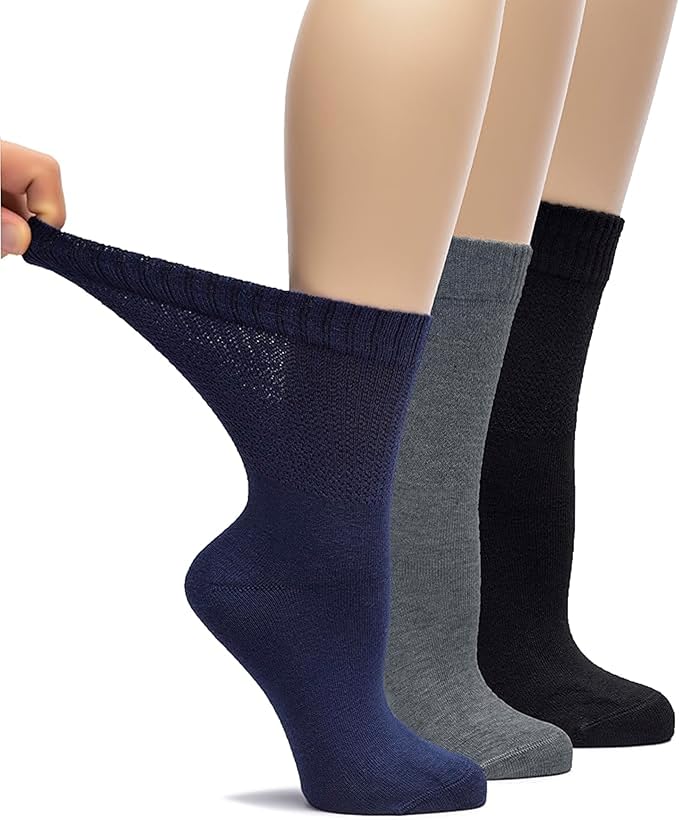
80% Rayon from Bamboo, 17% Polyamide, 3% Elastane
Hugh Ugoli Non-Binding Bamboo Crew Socks (3-Pack)
- Non-binding top
- Seamless toe
- Extra-wide fit
- 3-pack
Loose-fit diabetic-style socks with a non-binding top and no seam over the toes, marketed for swollen or sensitive feet.
This is genuinely one of our thinnest sections — our catalog so far leans toward sun protection, not cold-weather circulation gear. If a specific glove or hand warmer has worked for you, we'd like to know.