Joint pain and swelling from lupus or rheumatoid arthritis don't check which closet they're in. But the adaptive-wear industry has mostly built its product photography, sizing, and styling around women's clothing — which can make it feel like there's nothing out there if you're not shopping in that aisle. There's a simpler starting point: most of the actual friction is in a handful of specific motions — small buttons, tight cuffs, narrow sock bands — and those have gender-agnostic fixes that work with shirts and pants you already own.
Start with the motion, not the garment
- Small buttons are usually the first thing to go. A button hook with a wide, non-slip handle does the pinching motion for you — it works on any button-up shirt, including ones you already have.
- Tight sock bands add pressure exactly where swelling already is. Non-binding socks exist in plain, ordinary styles that don't read as "adaptive" at all.
- Zippers get easier with a simple pull-tab loop threaded on — cheaper and less disruptive than replacing a jacket.
Where it's worth buying something new
Some brands do make men's adaptive pieces — magnetic-closure button-ups exist in men's cuts from a few specialty makers — but we haven't vetted a specific one well enough to recommend it here yet, and we'd rather say that plainly than link something we can't stand behind. The two tools below are a lower-cost, lower-commitment starting point while we work on that.

Vive Button Hook with Zipper Pull
- Wide non-slip handle
- Button hook end
- Zipper pull loop
- Lightweight
A simple hooked tool that loops through a buttonhole or zipper pull so you don't need to pinch or grip small fasteners.
Worth knowing: Best suited to someone with at least partial grip in one hand — a reviewer with nerve/dexterity loss in one hand found it hard to manage single-handed.
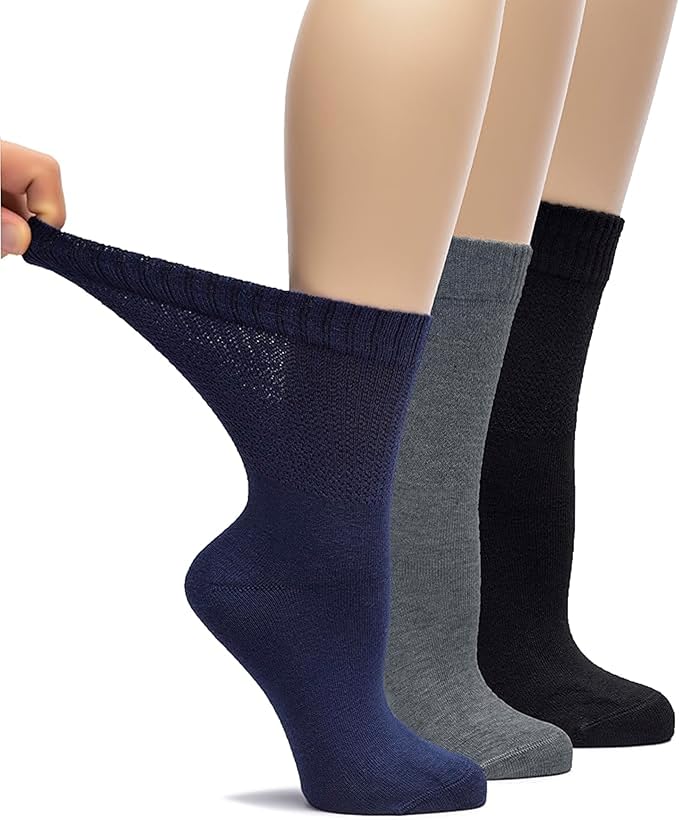
Hugh Ugoli Non-Binding Bamboo Crew Socks (3-Pack)
- Non-binding top
- Seamless toe
- Extra-wide fit
- 3-pack
Loose-fit diabetic-style socks with a non-binding top and no seam over the toes, marketed for swollen or sensitive feet.
Found a men's adaptive piece that's actually good? Tell us about it — this is the next gap on our list.