For anyone who's bought adaptive pieces from a small specialty maker because there wasn't another option, a big brand entering the category is genuinely good news: more competition, more style choices, and less of the "obviously medical" look that some adaptive clothing has had. It's worth being clear-eyed about what's actually changing, though.
What mainstreaming actually brings
- More style options at the same functional level. Magnetic closures and pull-on designs aren't new — what's new is more brands putting real design effort into how they look, not just how they work.
- Lower prices, eventually. More competition and volume tend to bring prices down across a category over time, the same pattern UPF clothing has seen.
- Mixed quality, especially early on. A big brand's first adaptive line isn't guaranteed to match a specialty maker's years of iteration on the actual mechanism — check reviews specific to the adaptive feature, not just the brand name.
What hasn't changed
The core problem adaptive clothing solves — small fasteners and tight closures being genuinely difficult with joint pain or reduced grip — is the same regardless of who's selling the solution. A specialty brand like MagnaReady, which has built its whole business around magnetic closures for exactly this need, still has more iteration behind a single garment than a big brand's first season usually will.

MagnaReady Women's Adaptive Magnetic Closure Classic Blouse
- Magnetic placket & cuffs
- One-handed dressing
- Curved hem
- Elastic back waist
Looks like a classic button-up, but the placket and cuffs close with hidden magnets — no small buttons to grip.
Worth knowing: This color/size combo is newly listed with no reviews yet, though MagnaReady is an established adaptive-wear brand.

Vive Button Hook with Zipper Pull
- Wide non-slip handle
- Button hook end
- Zipper pull loop
- Lightweight
A simple hooked tool that loops through a buttonhole or zipper pull so you don't need to pinch or grip small fasteners.
Worth knowing: Best suited to someone with at least partial grip in one hand — a reviewer with nerve/dexterity loss in one hand found it hard to manage single-handed.
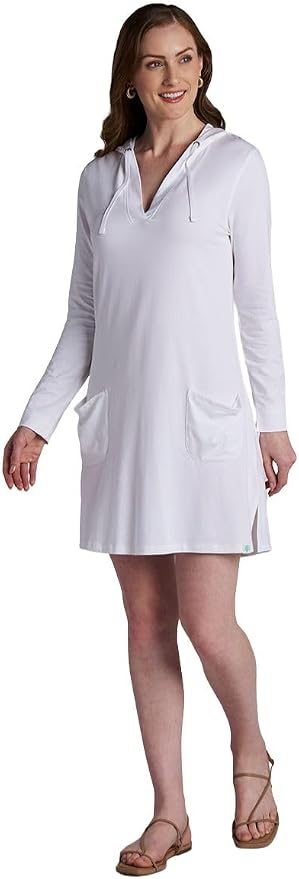
Coolibar Hooded Cover-Up Dress with Pockets (Catalina)
- UPF 50+
- Pull-on, no zipper
- Hood with drawcord
- Side pockets
A relaxed, one-step pullover dress with a deep V-neck, hood and front pockets — no buttons, zips or clasps to manage.
Worth knowing: Closes by pulling over the head rather than a tie-waist wrap.